

In Singapore, navigating public spaces safely and independently is an essential part of daily life. This is especially for individuals with physical disabilities such as muscular dystrophy. To support mobility needs, a variety of devices are available. However, not all mobility devices are treated the same under Singapore law. A key distinction exists between Personal Mobility Aids (PMAs) and Personal Mobility Devices (PMDs) and understanding this difference is crucial for individuals with disabilities, caregivers, and the wider community.
What Are PMAs?
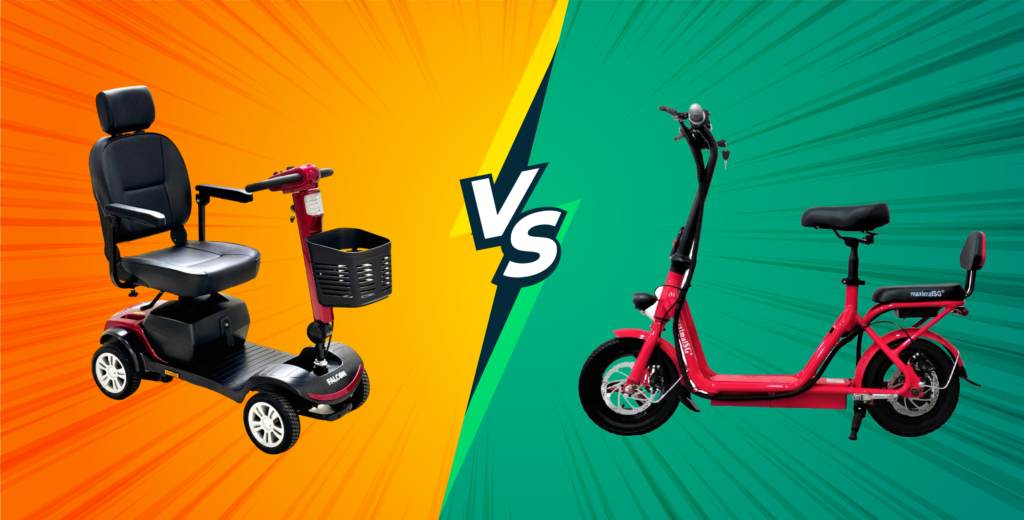
Personal Mobility Aids (PMAs) are devices such as wheelchairs (manual or motorised) and mobility scooters, designed to support individuals with mobility challenges due to age, injury, or medical conditions. As essential medical aids, PMAs are allowed on footpaths and in public areas like malls, MRT stations, and hawker centres. They are not subject to age, speed, or registration requirements.
What Are PMDs?
Personal Mobility Devices (PMDs) are built for general transportation or recreation. These include e-scooters, skateboards, kick scooters, unicycles, hoverboards, and Segways. PMDs are regulated under Singapore’s Active Mobility Act and must meet strict weight, speed, and certification standards. E-scooters, for example, are banned from footpaths and can only be used on cycling paths. Riders must be at least 16 years old and pass a theory test; younger users must be supervised by a certified adult.
While mobility scooters and e-scooters may look alike, only mobility scooters are PMAs. This distinction is crucial—PMAs serve a medical function, while PMDs do not.
Why This Distinction Matters
For individuals with muscular dystrophy and similar conditions, this distinction is critical. Many rely on motorised wheelchairs or mobility scooters to move around safely and independently. However, to the untrained eye, these devices may resemble PMDs, which can look like small electric vehicles. This misunderstanding can lead to unnecessary restrictions or even confrontation, especially in shared spaces or when using public transport. Mislabeling a PMA as a PMD can unfairly penalise users who depend on these aids for basic mobility.
MDAS continues to advocate for greater awareness and clearer communication around this issue. It’s important for people to understand that PMAs are essential medical aids, not recreational devices. Individuals using PMAs have the legal right to access footpaths, walkways, and public facilities. Labelling or treating a PMA as a PMD can infringe on the rights and dignity of persons with disabilities.
Accessibility and mobility are key pillars of inclusion. Understanding the differences between PMAs and PMDs helps build a more informed, empathetic, and inclusive society—one where people with muscular dystrophy and other disabilities can move with confidence and dignity.
This article draws information from the following source: https://singaporelegaladvice.com/law-articles/personal-mobility-aid-pma-laws-singapore-users/